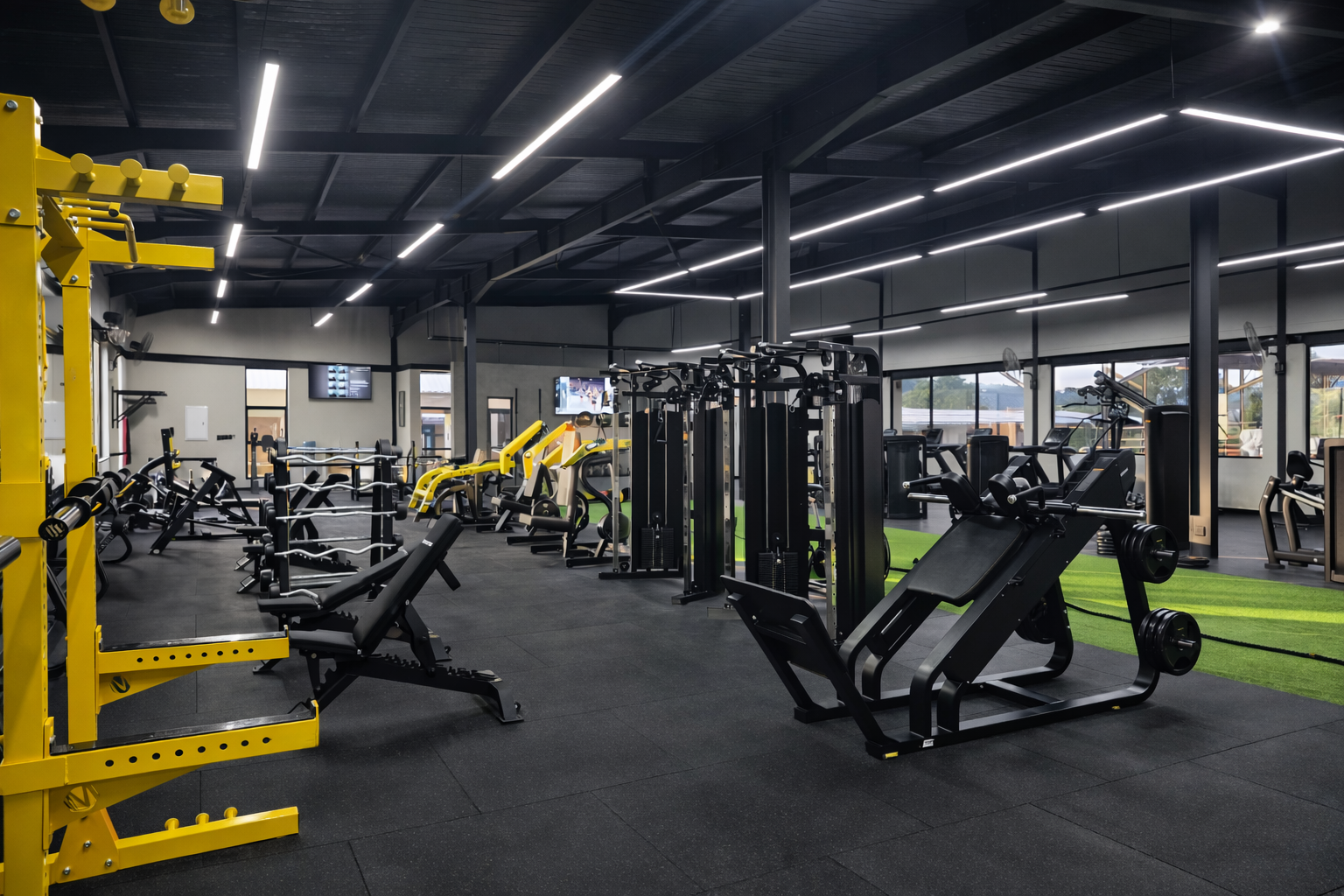
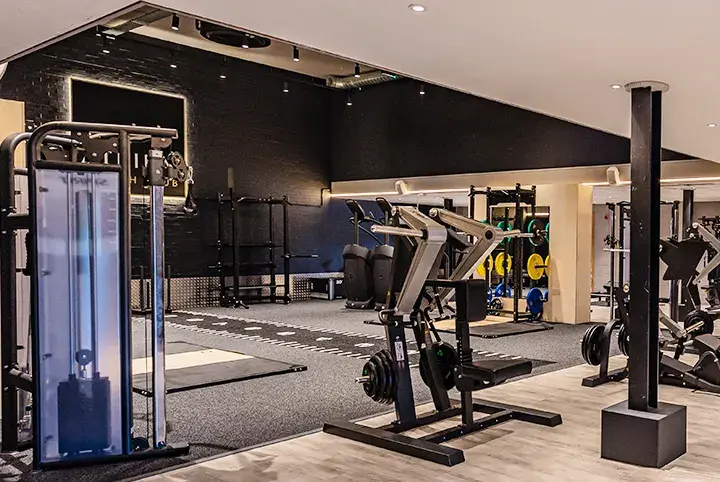
Home vs Commercial Gym Equipment: What's the Real Difference?
Why the label on the box matters
Two dumbbells that weigh 10kg can cost R400 or R1,400 — same weight, wildly different builds. That gap tells the whole story of home vs commercial gym equipment: the specification, warranty and duty cycle change everything about how long the machine lasts and who it's safe for.
This guide breaks down the specific engineering differences, the warranty terms you'll actually see in South Africa, and when to spend on commercial grade vs when semi-commercial or home-use gear is smarter.
What "commercial grade" actually means
There is no single legal definition, but the industry has settled on four benchmarks every commercial machine should hit:
- Duty cycle — designed for 8–16 hours of continuous use per day
- Frame — 3mm+ steel tubing, welded (not bolted) at load-bearing joints
- Components — sealed industrial bearings, machined pulleys, cable-rated aircraft wire
- Certification — EN 957 or ISO 20957 for the specific class (Class S = commercial)
Home-use gear usually targets 1–3 hours a day for a single user under 100kg. Semi-commercial sits between the two — 4–6 hours daily, multi-user, but usually with lighter frames than pure commercial.
Frame steel and welds
The most common failure on cheap gym equipment isn't the electronics or the upholstery — it's the frame flexing or cracking at a weld.
| Spec | Home | Semi-commercial | Commercial |
|---|---|---|---|
| Steel tubing | 1.5–2mm | 2.5–3mm | 3mm+ |
| Weld pattern | Spot welds | Continuous | Continuous + gusseted |
| Max user weight | 120kg | 150kg | 180–220kg |
| Anti-corrosion | Powder coat | Powder coat + primer | Zinc + powder coat |
A commercial half rack weighs 180–260kg empty for a reason — that mass is what keeps a 200kg deadlift stable.
Motors and drive systems
Cardio machines live and die on the motor. Read two numbers on the spec sheet:
- Continuous horsepower (CHP or HP) — real, sustained output
- Peak horsepower — a marketing number; ignore it
| Machine | Home CHP | Commercial CHP |
|---|---|---|
| Treadmill | 2.0–2.5 | 3.5–5.0 |
| Elliptical | Belt drive, no motor | Poly-V belt, sealed bearings |
| Indoor bike | Friction pad | Magnetic, 30+ levels |
Undersized motors overheat, then throttle down, then burn out. On the Spirit CT900 commercial treadmill, the 4.0 HP motor is rated for continuous commercial use — a 2.0 HP home motor would fail inside a month in the same setting.
Bearings, cables and small parts
Commercial cable machines use aircraft-grade 7mm wire with sealed pulleys. Home versions typically ship 5mm cable in plastic pulleys — fine for a single user, but they fray inside a year of shared use.
Selectorised machines are the clearest test:
- Home — plastic weight shrouds, exposed guide rods, standard bearings
- Commercial — steel shrouds, chromed guide rods, self-lubricating linear bearings
Upholstery and small comfort details
- Vinyl rating: commercial ships 100,000+ Wyzenbeek rub cycles; home is 30,000–50,000
- Padding: commercial uses moulded high-density foam; home uses layered CMHR foam
- Grip finish: commercial gets diamond-plate rubber; home gets moulded plastic
These sound cosmetic. They aren't — cracked upholstery is the number one reason gym owners replace machines early.
Warranty terms in South Africa
Warranties tell you what the manufacturer actually stands behind. Typical terms we see:
| Coverage | Home use | Commercial |
|---|---|---|
| Frame | 2–5 years | Lifetime |
| Motor | 1–3 years | 5–10 years |
| Parts | 1 year | 3–5 years |
| Labour | 90 days | 1–2 years |
| Upholstery | 90 days | 1 year |
Critical detail: installing a home-use machine in a commercial setting (gym, hotel, estate gym, corporate wellness room) voids the warranty from day one. Insurers will also refuse claims.
When to buy commercial vs semi-commercial vs home
Answer three questions:
- Who uses it? Single household → home. Multi-family or small group → semi-commercial. Public or paying members → commercial.
- How many hours a day? Under 3 → home. 3–6 → semi-commercial. 6+ → commercial.
- What's the replacement cost of downtime? Zero → home. Some → semi-commercial. High (revenue, member churn) → commercial.
Concrete examples we quote every week:
- Garage gym, one lifter: home-use is fine and the sensible spend
- Estate or body corporate gym: semi-commercial is the sweet spot
- Hotel, office wellness room, boutique studio: commercial only
- Public gym or franchise: commercial only, plus service contracts
Which commercial brands are available in South Africa?
We stock and service:
- Spirit Fitness — cardio and light strength, US design, ISO 20957 Class S
- LivePro — functional training, rigs and accessories
- OKPRO — heavy plate-loaded and free weights
- UFC — combat and conditioning
- Torque Fitness — modular functional rigs and X-Lab
Buying checklist
Before you sign anything:
- Confirm the class rating (S for commercial, H for home)
- Ask for the warranty document in writing, with commercial use spelled out
- Check the max user weight (should exceed heaviest user + 30kg buffer)
- Confirm parts availability in South Africa — imported one-off machines often can't be serviced
- Get delivery, install and disposal of packaging quoted upfront
Next step
If you're kitting out an estate, hotel or paying-member facility, book a free consultation and we'll match spec to use case rather than just to budget. For home setups, browse the shop filtered by "home" or "semi-commercial".
Frequently Asked Questions
Need Expert Advice?
Our team can help you spec the right equipment for your space and budget — with delivery, installation and finance across South Africa.